Choosing the Right Material Matters More Than Choosing the Lowest Price
When businesses plan an office setup in Dubai, furniture selection often focuses on appearance, layout, and budget. However, the material used in office furniture plays a major role in durability, maintenance requirements, and long-term value.
Dubai offices operate in a demanding environment. High temperatures, humidity changes, frequent cleaning, and daily commercial usage can affect furniture performance over time. A desk that looks suitable in a showroom may not always be the right choice for a busy workplace.
For procurement managers, facilities teams, and business owners, choosing the right office furniture materials in Dubai means looking beyond initial cost. The better decision comes from understanding how different materials perform under real workplace conditions.
Whether you are furnishing a new corporate office, expanding a branch, or replacing existing furniture, selecting suitable materials helps reduce maintenance issues and supports a more reliable workplace environment.
Quick Answer
The best office furniture materials for Dubai climate are materials that balance durability, easy maintenance, appearance, and commercial performance. Laminate finishes, engineered wood, metal components, and quality upholstery are commonly selected because they can handle daily office use while providing long-term value.
Key Takeaways
- Office furniture materials should be selected based on usage, maintenance, and durability, not appearance alone.
- Dubai’s climate makes moisture resistance and easy cleaning important considerations.
- Different office areas require different materials depending on their purpose.
- Laminate, engineered wood, metal, and quality upholstery are common choices for commercial workplaces.
- Comparing specifications helps procurement teams select furniture with better lifecycle value.
Why Office Furniture Material Selection Is Important in Dubai
Office furniture is a long-term investment. Unlike residential furniture, commercial office furniture is used continuously by multiple people every working day.
A workstation used by employees may experience years of daily movement, cleaning, and equipment placement. Reception furniture may need to maintain a professional appearance despite constant visitor interaction.
Choosing unsuitable materials can result in:
- Scratches and surface damage
- Difficult maintenance
- Faster replacement requirements
- Poor workplace appearance
- Higher lifecycle costs
A procurement decision should therefore consider how the furniture will perform after installation, not only how it looks during the purchasing stage.
What Factors Should You Consider When Choosing Office Furniture Materials in Dubai?
Resistance to Heat and Humidity
Dubai’s climate creates unique considerations for furniture selection. While most modern offices operate with air conditioning, furniture materials still need to handle temperature changes during transportation, storage, installation, and daily use.
Materials with stable construction and quality finishes are generally preferred because they are less likely to experience issues such as surface deterioration or premature wear.
Daily Commercial Usage
The expected usage level should influence material selection.
A desk used by an employee for eight hours every day requires different durability standards compared with a meeting table used occasionally.
Before selecting materials, procurement teams should evaluate:
- Number of users
- Expected daily usage
- Office function
- Cleaning frequency
- Replacement expectations
Maintenance Requirements
Commercial offices require furniture that can be maintained efficiently.
Materials that are easy to clean and resistant to normal workplace wear can reduce maintenance effort over time. This is especially important for businesses managing large offices where replacing or repairing furniture can affect operations.
Workplace Appearance
Material choice also affects the overall workplace design.
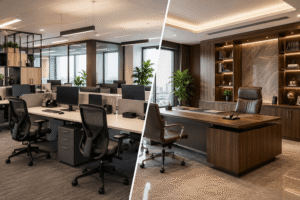
Executive offices, reception areas, meeting rooms, and employee workstations may require different finishes to achieve the desired balance between appearance and practicality.
A professional workplace usually combines different materials depending on the purpose of each area.
What Are the Most Common Office Furniture Materials Used in Dubai?
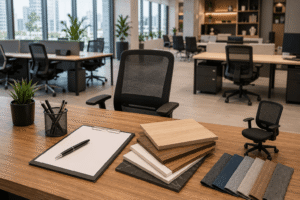
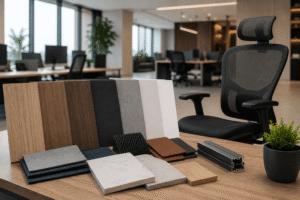
Office furniture manufacturers and suppliers commonly use a combination of materials depending on product type, design requirements, and budget considerations.
The most common materials include:
- Engineered wood
- MDF
- Laminate finishes
- Veneer finishes
- Solid wood
- Metal frames
- Fabric and mesh upholstery
- Leather and synthetic upholstery
Each material has different advantages and limitations.
Engineered Wood and MDF Office Furniture
Engineered wood and MDF are widely used in commercial office furniture because they provide a practical balance between cost, appearance, and functionality.
MDF, or medium-density fibreboard, is an engineered wood product made from compressed wood fibres. It provides a smooth surface that can be finished with laminates, veneers, or decorative coatings.
Advantages of MDF and Engineered Wood
Common benefits include:
- Smooth finishing options
- Consistent appearance
- Suitable for different office designs
- More affordable than solid wood
- Easy integration with modern furniture styles
These materials are commonly used for:
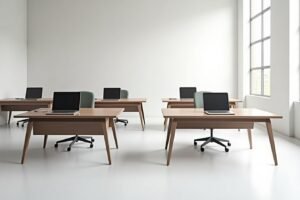
- Office desks
- Workstations
- Storage units
- Meeting tables
- Reception furniture
Limitations to Consider
MDF and engineered wood should be selected carefully based on quality and application.
Important considerations include:
- Edge finishing quality
- Surface protection
- Thickness
- Hardware quality
- Expected usage level
For high-use commercial environments, procurement teams should compare specifications rather than selecting products based only on appearance.
Laminate Office Furniture Finishes
Laminate is one of the most common finishes used in commercial office furniture because it combines durability, easy maintenance, and design flexibility.
Laminate surfaces are created by applying a protective decorative layer over a core material, creating a finish that can imitate wood, stone, or modern textures.
Why Laminate Is Popular for Dubai Offices
Laminate furniture is often selected because it offers:
- Resistance to everyday scratches
- Easy cleaning
- Multiple design options
- Consistent appearance across large projects
- Practical maintenance requirements
For offices with many workstations or departments, laminate finishes can provide a professional appearance while remaining practical for daily use.
Businesses planning workplace setups can also review their overall office furniture solutions to compare suitable furniture categories, layouts, and requirements before making procurement decisions.
Solid Wood Office Furniture
Solid wood furniture is valued for its appearance, strength, and premium feel. It is commonly used in executive offices, boardrooms, and areas where visual presentation is an important consideration.
Advantages of Solid Wood
Benefits include:
- Premium appearance
- Strong construction
- Natural finish
- Long service potential when maintained properly
Where Solid Wood Works Best
Solid wood is generally more suitable for:
- Executive desks
- Boardroom tables
- Premium reception areas
For general employee workstations, other materials may provide a better balance between cost, durability, and practicality.
Metal Components and Steel Furniture Elements
Metal plays an important role in commercial office furniture, especially in areas where strength and durability are priorities.
Metal components are commonly found in:
- Desk frames
- Workstation structures
- Storage cabinets
- Support systems
- Office accessories
Benefits of Metal Construction
Metal components can provide:
- Structural strength
- Better load support
- Long-term durability
- Stability for commercial applications
For businesses managing larger office projects, selecting furniture with suitable structural components helps improve reliability during extended daily use.
Fabric, Mesh, and Upholstery Materials
Seating materials require separate consideration because office chairs experience continuous human contact and movement.
The right upholstery depends on:
- Usage duration
- Office environment
- Cleaning requirements
- Design preferences
Mesh Materials
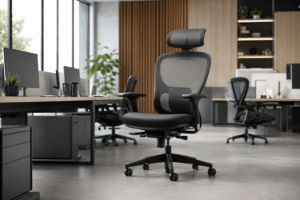
Mesh is commonly selected for employee workstations because it provides airflow and supports comfortable seating in warm environments.
Fabric Upholstery
Fabric chairs offer design flexibility and can provide a comfortable workplace appearance. They are often selected for meeting rooms, collaborative areas, and general office seating.
Leather and Synthetic Upholstery
Leather and synthetic finishes are often used for executive seating because they create a more formal appearance.
However, procurement teams should consider maintenance requirements and expected usage before selecting premium finishes.
Comparing Common Office Furniture Materials
| Material | Main Advantages | Suitable Applications |
| MDF / Engineered Wood | Cost-effective, versatile finishes, practical | Desks, workstations, storage |
| Laminate | Easy maintenance, durable surface, design options | Employee desks, tables, workstations |
| Solid Wood | Premium appearance, strong construction | Executive offices, boardrooms |
| Metal | Strength and durability | Frames, storage, support structures |
| Mesh | Breathability and comfort | Office chairs and workstations |
| Fabric | Flexible design options | Meeting rooms and seating areas |
Which Office Furniture Material Is Best for Different Office Areas?
The best office furniture material depends on where the furniture will be used. A material that works well for employee workstations may not be the ideal choice for executive offices or reception areas.
Procurement teams should select materials based on function, expected usage, and maintenance requirements rather than applying one material across the entire workplace.
Employee Workstations
Employee workstations experience the highest daily usage in most offices. Materials should provide durability, easy maintenance, and a professional appearance.
Recommended choices include:
- Laminate finishes for scratch resistance and easy cleaning
- Engineered wood for practical commercial applications
- Metal support structures for better stability
For large offices, businesses should also consider consistency. Selecting materials that remain available over time makes future expansion and replacement easier.
Executive Offices
Executive offices usually require a balance between professional appearance and long-term performance.
Common material choices include:
- Premium wood finishes
- Veneer surfaces
- High-quality engineered wood
- Durable metal components
The focus is often on creating a professional environment while maintaining practical usability.
Meeting Rooms and Conference Areas
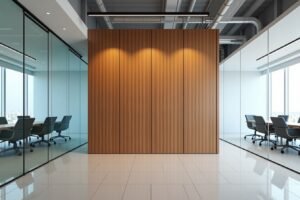
Meeting rooms are used differently from individual workstations. Furniture in these areas should create a professional impression while handling regular meetings and discussions.
Suitable materials include:
- Laminate surfaces
- Veneer finishes
- Durable engineered wood
Meeting tables should also be selected based on size, cable management requirements, and the type of meetings conducted.
Reception Areas
Reception furniture represents the first impression visitors receive when entering an office.
Material selection often focuses on:
- Visual appearance
- Easy cleaning
- Durability
- Brand presentation
Many businesses combine different materials in reception areas, such as decorative finishes with durable internal structures.
Storage Areas
Storage furniture requires strength and reliability because it supports documents, equipment, and workplace supplies.
Common choices include:
- Steel components
- Reinforced engineered wood
- Durable laminate finishes
For offices requiring frequent access to storage, easy maintenance and structural strength should be key considerations.
MDF vs Solid Wood vs Laminate: Which Is Better for Dubai Offices?
There is no single material that is perfect for every office environment. The right choice depends on the furniture type, usage level, design requirements, and expected lifespan.
| Material | Advantages | Limitations | Best Used For |
| MDF / Engineered Wood | Affordable, versatile finishes, consistent appearance | Quality varies depending on construction | Desks, workstations, storage |
| Laminate | Easy maintenance, scratch resistance, many design options | Surface quality depends on finish grade | Employee work areas, meeting tables |
| Solid Wood | Premium appearance, strong construction | Higher cost and requires proper care | Executive offices, boardrooms |
For most commercial offices in Dubai, laminate and engineered wood provide a practical balance between appearance, durability, and budget control. Solid wood is usually reserved for areas where premium presentation is a priority.
How Does Dubai Climate Affect Office Furniture Performance?
Dubai’s climate does not mean that all furniture materials will fail quickly. However, selecting unsuitable materials or ignoring storage and maintenance conditions can reduce furniture lifespan.
Several environmental factors should be considered.
Temperature Changes
Furniture may experience temperature differences during:
- Transportation
- Warehouse storage
- Installation periods
- Office relocation
Quality construction and proper finishing help furniture maintain its appearance and performance.
Humidity Considerations
Humidity levels can affect certain materials, especially when furniture is exposed to unsuitable storage conditions.
Procurement teams should consider:
- Material quality
- Edge finishing
- Surface protection
- Supplier handling practices
Cleaning and Maintenance
Commercial offices require regular cleaning. Materials that tolerate routine maintenance are often more practical for busy workplaces.
For example:
- Laminate surfaces can usually be cleaned easily
- Fabric seating requires appropriate maintenance procedures
- Premium finishes may require more careful handling
How to Choose Durable Office Furniture Materials for Your Business
A structured evaluation process helps procurement teams avoid choosing furniture based only on appearance or initial quotation price.
Step 1: Understand How the Furniture Will Be Used
Start by identifying:
- Number of employees
- Daily usage hours
- Office department requirements
- Expected furniture lifespan
A finance department workstation and a reception table may require completely different material considerations.
Step 2: Compare Product Specifications
Before approving a purchase, review:
- Material type
- Surface finish
- Thickness
- Structural components
- Hardware quality
- Maintenance requirements
Clear specifications allow businesses to compare suppliers more accurately.
Step 3: Consider Long-Term Value
The lowest initial price does not always provide the best return.
A better evaluation considers:
- Expected lifespan
- Replacement costs
- Maintenance requirements
- Future availability
Businesses planning office setups can also review their overall office furniture solutions strategy to ensure seating, desks, storage, and work areas are selected together.
Step 4: Select Materials Based on Location
Different workplace areas have different requirements.
For example:
- Employee workstations need durability
- Executive offices need professional finishes
- Reception areas need appearance and resilience
- Storage areas need strength
A mixed-material approach is often more practical than using one material everywhere.
Common Mistakes Businesses Make When Choosing Office Furniture Materials
Choosing Based Only on Appearance
A furniture finish may look impressive in a showroom but may not perform well under daily commercial usage.
Procurement teams should evaluate construction quality and material suitability before focusing only on design.
Selecting the Cheapest Option Without Comparing Specifications
Lower-cost furniture may appear attractive during budgeting, but frequent replacement can increase overall expenses.
A better approach is comparing:
- Material quality
- Durability
- Warranty information
- Expected service life
Ignoring Future Expansion
Businesses often grow after their initial office setup.
Selecting furniture from product ranges that remain available makes future additions easier and helps maintain workplace consistency.
Not Considering Maintenance Requirements
Furniture requires ongoing care after installation.
Before purchasing, businesses should understand:
- Cleaning requirements
- Repair options
- Replacement availability
- Product support
How to Choose an Office Furniture Supplier in Dubai
Material selection is only one part of successful office furniture procurement. The supplier’s ability to provide accurate information, suitable options, and reliable delivery also affects project outcomes.
When evaluating suppliers, consider:
Product Range
A supplier with multiple office furniture categories can simplify procurement by reducing the need to coordinate with multiple vendors.
This is useful for projects requiring:
- Office desks
- Workstations
- Seating
- Storage
- Meeting room furniture
Businesses looking for commercial workplace furniture can explore Lejam LLC as a supplier for sourcing and supplying office furniture requirements across the UAE.
Clear Product Information
Reliable suppliers should provide details such as:
- Dimensions
- Materials
- Available finishes
- Configurations
- Delivery information
This helps procurement teams compare options based on specifications rather than assumptions.
Ability to Support Commercial Projects
Commercial furniture projects often involve:
- Bulk quantities
- Multiple furniture categories
- Project timelines
- Delivery coordination
Choosing a supplier familiar with business requirements can make procurement smoother.
Delivery Capability
Businesses operating across different Emirates should consider supplier delivery capability when planning larger furniture projects.
A supplier that can coordinate deliveries efficiently helps reduce delays during office setup and expansion projects.
Frequently Asked Questions About Office Furniture Materials in Dubai
What is the best material for office furniture in Dubai?
The best material depends on the furniture type and workplace requirements. Laminate finishes, engineered wood, metal components, and quality upholstery are commonly selected because they provide a balance of durability, appearance, and maintenance convenience.
Is MDF suitable for office furniture in UAE climate?
Yes, MDF can be suitable for office furniture when it is properly constructed and finished. The quality of the surface protection, edge finishing, and overall build quality are important factors when selecting MDF furniture for commercial use.
Which office desk material lasts the longest?
The lifespan of an office desk depends on construction quality, usage, and maintenance. Materials such as durable laminate finishes combined with strong internal structures are commonly selected for high-use commercial workspaces.
Are wooden office furniture materials suitable for Dubai offices?
Yes, wooden office furniture can be suitable for Dubai offices when the material and finish match the application. Solid wood and premium wood finishes are often used in executive areas, while engineered wood solutions are commonly used for general office furniture.
How do I choose durable office furniture for commercial use?
Choose furniture based on usage requirements, material quality, specifications, maintenance needs, and supplier support. The right choice should provide reliable performance over time rather than only meeting the lowest purchase price.
Final Thoughts: Selecting Office Furniture Materials for Dubai Offices
Choosing the right office furniture materials in Dubai requires a balance between appearance, durability, maintenance, and long-term value.
The ideal material depends on where the furniture will be used, how frequently it will be used, and what performance expectations the business has.
A practical procurement approach is to evaluate materials based on real workplace requirements rather than choosing based only on price or design.
Businesses that compare specifications, plan future needs, and select suitable materials can create workspaces that remain functional, professional, and cost-effective over time.
Need Help Selecting Office Furniture for Your Workplace?
If you are planning a new office setup, expansion project, or commercial furniture requirement, Lejam LLC can help you source suitable office furniture options based on your project needs, quantity requirements, and delivery location.
For a quotation or to discuss your office furniture requirements:
WhatsApp: https://wa.me/+971582386547
Contact Us: https://lejamllc.com/contact-us/
Related Reading
Businesses comparing furniture options can also review:
- [Custom vs Ready-Made Office Furniture: Which Is Best for UAE Businesses?](BLOG LINK)
- [How Much Does Office Furniture Cost in Dubai? A Complete Budget Planning Guide](BLOG LINK)
These guides help procurement teams evaluate furniture decisions from both cost and design perspectives.