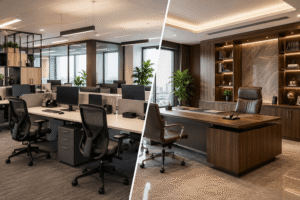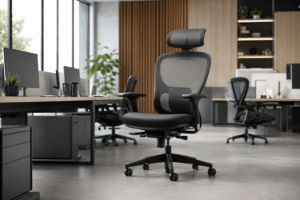
Executive office furniture is built with premium materials, larger proportions, and refined finishes — solid wood or veneer desks, leather or high-grade upholstered chairs — designed for management and leadership spaces. The right choice balances desk size to room proportions, chair ergonomics for long working hours, and a finish that matches the office’s overall style.
- Executive furniture differs from standard furniture in materials, proportions, and finish quality, not just price.
- Desk size should match room size — an oversized desk in a small office looks cramped rather than impressive.
- Executive chairs need genuine ergonomic adjustment, not just a leather look, since they’re used for long hours.
- Matching desk and chair finish creates a more cohesive, professional look than mixing unrelated styles.
- Budget for executive furniture varies widely by material — wood veneer and leather cost more than laminate and mesh.
What Counts as Executive Office Furniture?
Executive office furniture is designed specifically for management, director, and leadership spaces. It typically includes a larger desk (often with a modesty panel or credenza), a high-back chair with premium upholstery, and matching storage or side furniture.
The defining features are material quality and proportion — executive furniture uses solid wood, wood veneer, leather, and metal accents rather than laminate and mesh, and is sized to command a room rather than simply fit a desk-and-chair footprint.
Choosing the Right Executive Desk
Size: Match the desk to the room — a large executive desk in a small office reduces walking space and feels cramped rather than commanding
Material: Solid wood and wood veneer are the most common executive finishes; glass-top desks suit a more modern, minimalist office
Storage: Look for built-in drawers or a matching credenza rather than adding separate filing cabinets that break the visual line
Cable management: Executive desks handling multiple monitors and devices need built-in cable routing, not an afterthought
Modesty panel: A front panel adds a finished, formal look and blocks under-desk sightlines during meetings
Choosing the Right Executive Chair
Ergonomics: Adjustable height, lumbar support, and recline tension matter more than appearance for anyone sitting 6+ hours a day
Upholstery: Genuine or high-grade PU leather is standard for executive chairs; breathable mesh backs suit warmer, high-usage offices
Base and frame: A sturdy metal or reinforced base supports the larger, heavier build typical of executive seating
Armrests: Adjustable, padded armrests reduce shoulder strain during long calls or desk work
Proportions: An executive chair should visually balance the desk — an oversized chair at a modest desk looks mismatched
Executive vs Standard Office Furniture — What’s the Difference?
Standard office furniture prioritizes function and cost-efficiency for staff desking. Executive furniture prioritizes material quality, proportion, and finish — solid wood over laminate, leather over fabric, larger dimensions — because leadership spaces are used for client meetings and decision-making, not just daily task work.
Materials and Finishes: Wood, Leather, Glass, and Metal
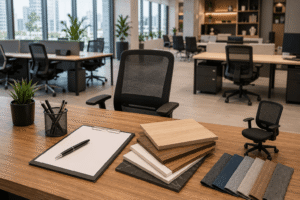
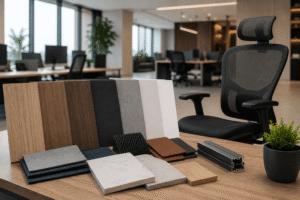
Wood and wood veneer: The most traditional executive finish — warm, formal, and durable, suited to classic or corporate office styles
Leather (genuine or PU): Standard for executive chairs and desk accents — durable, easy to clean, and reads as premium
Glass: Common in modern executive desks — creates an open, minimalist look but shows fingerprints and needs more upkeep
Metal accents: Used in legs, frames, and hardware to add a contemporary edge without losing a formal feel
Matching Furniture to Your Leadership Office Style
Traditional/corporate: Solid wood desk, leather high-back chair, dark or walnut finish
Modern/minimalist: Glass or light-veneer desk, mesh or slim-profile leather chair, metal accents
Boutique/creative: Mixed materials — wood desk with a lighter fabric chair, less formal but still polished
The office’s overall interior style should guide the furniture choice, not the other way around — furniture that clashes with the room’s finishes undercuts the professional impression it’s meant to create.
Cost Expectations for Executive Furniture in the UAE
Pricing depends heavily on material — laminate and mesh options sit at the lower end, while solid wood, genuine leather, and custom finishes push costs higher. Since exact pricing varies by supplier and specification, request a quotation based on your chosen materials and desk/chair combination for an accurate figure.
How to Choose Executive Furniture for Your Office
Measure the room first — desk size should leave comfortable walking space, not just fit against a wall.
Decide on a material direction (wood, glass, or mixed) based on your office’s existing interior style.
Prioritize chair ergonomics over appearance alone, especially for daily-use offices.
Match desk and chair finish where possible for a cohesive, deliberate look.
Request samples or a showroom visit before ordering, particularly for upholstery and wood finish.
Confirm storage needs — built-in drawers vs. a separate credenza — before finalizing the desk.
Frequently Asked Questions
What makes furniture "executive" instead of standard office furniture?
Executive furniture uses higher-grade materials — solid wood, veneer, leather — larger proportions, and more refined finishes, designed for leadership and client-facing spaces rather than daily staff desking.
What’s the best desk material for an executive office in the UAE?
Solid wood or wood veneer suits traditional and corporate offices; glass suits modern, minimalist spaces. The right choice depends on your office’s overall interior style.
How much should an executive office chair cost?
Cost varies by upholstery and build quality — mesh and PU leather options sit lower, genuine leather and reinforced frames push higher. Request a quotation for your specific requirements.
Should an executive desk and chair match in finish?
It’s not mandatory, but matching or complementary finishes create a more deliberate, cohesive look than mixing unrelated materials and colors.
What size desk fits a standard management office?
It depends on the room, but the desk should leave comfortable walking space around it — an oversized desk in a small room reduces functionality rather than adding impact.